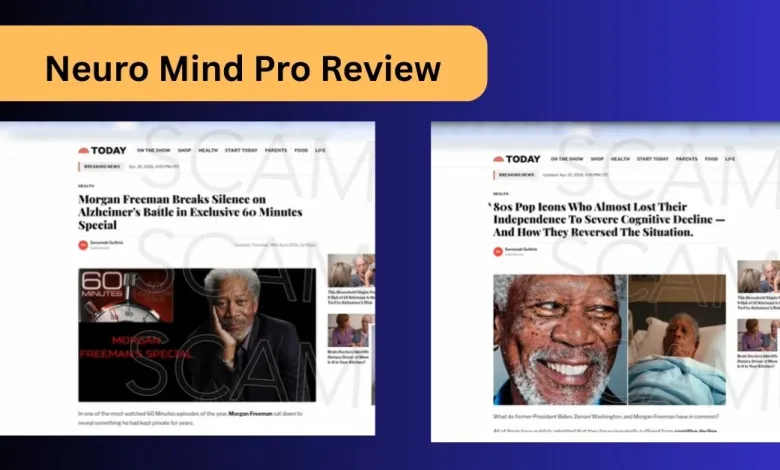
Verdict: CONFIRMED SCAM. Neuro Mind Pro is promoted through fake celebrity endorsements, AI-generated videos, misleading medical claims and a sales funnel built around a supposedly secret natural recipe. The marketing claims to reverse memory loss and even Alzheimer’s disease, but the evidence presented for those claims does not support them.
Is Neuro Mind Pro a Scam?
Yes. The marketing for Neuro Mind Pro follows a familiar online supplement scam pattern, and the claims become more questionable the deeper you look.
The product is presented as a breakthrough for brain health. Advertisements claim it can reverse memory loss, eliminate brain fog, restore mental clarity and even treat or cure Alzheimer’s disease.
Those are not ordinary supplement claims.
The promotion also uses familiar public figures to create the appearance of credibility. Morgan Freeman and Bill Gates are among the names associated with videos promoting the supposed breakthrough, alongside other public figures.
According to the source material, those videos are manipulated or AI-generated and are not genuine endorsements.
That is the first major red flag.
The second is the medical promise itself. Neuro Mind Pro is being sold as though a simple natural product can reverse serious neurological disease. The marketing does not provide credible evidence establishing that result.
How the Neuro Mind Pro Sales Funnel Works
The funnel starts by presenting viewers with a dramatic health problem and an apparent breakthrough.
You may first encounter an advertisement featuring what looks like a well-known person discussing memory loss or revealing a supposedly hidden treatment.
The goal is to establish trust before the product is even mentioned.
The next step is the secret remedy.
Instead of immediately explaining what Neuro Mind Pro is, the marketing promotes a simple natural recipe, often involving honey and a small number of ingredients. Viewers are told that this recipe can produce extraordinary improvements in memory or cognitive health.
Then comes the hook.
The audience is encouraged to keep watching because the recipe will supposedly be revealed later.
The video becomes longer and more elaborate. The viewer is given stories, dramatic claims and apparent expert commentary.
But the promised solution is not actually presented in the way the viewer was led to expect.
Instead, the funnel eventually directs the viewer toward Neuro Mind Pro, a supplement sold as the answer.
The recipe is the bait.
The supplement is the sale.
Fake Celebrity Endorsements and AI Videos
The use of familiar public figures is one of the clearest warning signs in the Neuro Mind Pro promotion.
The source identifies videos appearing to show Morgan Freeman discussing memory problems and a supposed solution. Other versions allegedly use Bill Gates, Clint Eastwood and additional public figures.
The problem is that these are presented as authentic endorsements when they are not.
AI technology can now be used to imitate a person’s voice, facial movements and mannerisms closely enough to create a convincing fake video. That makes the apparent endorsement look much more authoritative than the underlying product deserves.
A familiar face does not establish that the person actually supports the product.
The marketing is using recognition as a substitute for evidence.
The source also states that no credible doctor, celebrity, hospital or research institution has endorsed Neuro Mind Pro.
The “Honey Recipe” Trick
The supposed natural recipe is another important part of the funnel.
The promotion suggests that a small number of ordinary ingredients can unlock a powerful treatment for memory loss or Alzheimer’s disease.
That is an effective hook because it sounds simple, accessible and inexpensive.
But the viewer is not simply given the recipe and allowed to decide whether it is useful.
Instead, the marketing encourages the viewer to stay through a long presentation to discover the secret.
That creates an information gap. The viewer keeps watching because the answer is always supposedly just ahead.
Eventually, the product appears.
This strategy is not evidence that the supplement works. It is a sales technique designed to keep the viewer emotionally invested until they reach the purchase page.
Fake News Websites and Misleading Branding
Another major red flag is the use of fake media-style websites.
The marketing can be presented in a format designed to resemble established programs or news organizations, including references to brands such as 60 Minutes, the Today Show and other recognizable media outlets.
The purpose is obvious. Familiar branding can make a sales page look like independent journalism.
But a page that imitates a news organization is not automatically a genuine news report.
The source points to several warning signs, including unusual domain names, no verifiable connection to the real media company, and a lack of identifiable authors or legitimate sources.
That distinction matters.
A legitimate news story should be traceable to an actual publication. A sales page dressed up as journalism is something entirely different.
Neuro Mind Pro’s Alzheimer’s Claims
The health claims are where I would be most cautious.
The marketing suggests that Neuro Mind Pro can reverse memory loss, restore cognitive function, eliminate brain fog and even cure or reverse Alzheimer’s disease.
Those are serious medical claims.
The source states that there is no supplement capable of curing or reversing Alzheimer’s disease and that the claims made for Neuro Mind Pro are not supported by credible scientific evidence.
That means consumers should not interpret the product’s advertisements as a substitute for legitimate medical care.
The marketing also creates the impression that the product can work quickly and outperform conventional treatments. Again, the source provides no credible evidence establishing those results.
A dramatic testimonial or a convincing video does not change that.
Fake Reviews and Before-and-After Stories
Once visitors reach the sales page, the presentation often shifts to testimonials.
The pages may display glowing five-star reviews, dramatic stories and supposed before-and-after experiences designed to show that people’s lives changed after taking the product.
But the source warns that these reviews can be fabricated, AI-generated or controlled by the seller.
That is a critical distinction.
A testimonial is not independent evidence simply because it appears next to the product.
The same applies to before-and-after stories. Without verifiable identities, credible documentation and independent confirmation, those stories cannot establish that Neuro Mind Pro produced the claimed result.
Hidden Subscriptions and Refund Problems
There is another financial risk associated with this style of supplement funnel.
The source identifies reports connected to similar products involving hidden subscription charges, recurring billing and difficulty obtaining refunds.
That creates a problem for consumers who believe they are making a straightforward one-time purchase.
A transaction that turns into recurring charges can quickly become much more expensive than the original offer suggests.
That is why the checkout terms matter just as much as the headline price. Consumers need to know exactly what they are authorizing before submitting payment.
Neuro Mind Pro Is Part of a Larger Pattern
Neuro Mind Pro is not presented as an isolated example of questionable supplement marketing.
The source describes a broader system built around recycled formulas, constantly changing product names, emotional storytelling, fake authority figures and aggressive social media advertising.
The brand can change.
The story can change.
The faces can change.
The basic sales mechanism remains the same.
A frightening health problem is introduced. A secret breakthrough is promised. A recognizable person is used to make the story believable. The viewer is kept watching. Then a supplement is offered as the solution.
That pattern is more important than any single product name.
Should You Buy Neuro Mind Pro?
Based on the marketing described in the source material, I would not buy Neuro Mind Pro as a treatment for memory loss or Alzheimer’s disease.
The strongest warning signs are the alleged AI-generated celebrity endorsements, the fake media presentation, the extraordinary medical claims, the secret-recipe sales tactic and the reported subscription and refund problems associated with this type of offer.
The product is being marketed as something far more powerful than an ordinary cognitive support supplement.
That is exactly why the evidence needs to be held to a much higher standard.
Neuro Mind Pro Bottom Line
The source identifies Neuro Mind Pro as a scam built around deceptive marketing rather than credible evidence of a breakthrough treatment.
The central claims do not rest on a verified celebrity endorsement or established medical evidence. Instead, the funnel relies on artificial authority, emotional storytelling and the promise of a secret natural solution before directing consumers toward a paid supplement.
The most important warning is simple: do not mistake an AI-generated video, a fake news page or an emotional testimonial for medical evidence.
What to Do If You Already Bought Neuro Mind Pro
If you have already purchased Neuro Mind Pro and believe you were charged without clear authorization, contact your bank or credit card provider immediately. Ask about disputing the transaction and monitor your account for additional recurring charges.
Keep your order confirmation, payment records, screenshots of the advertisement and any correspondence with the seller.
If you believe you were defrauded, you can also file a complaint with the FBI’s Internet Crime Complaint Center at IC3.gov. Include relevant email correspondence and the company name and phone number listed next to the charge on your statement.
I’m not a doctor, and this isn’t medical advice.