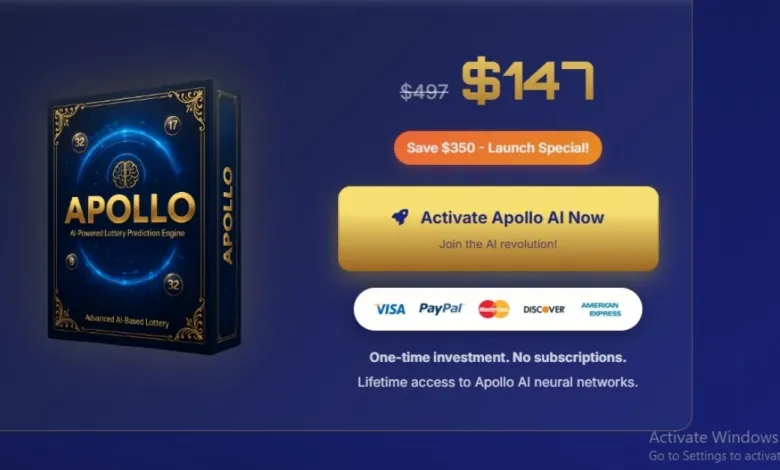
Verdict: CONFIRMED SCAM. The Jay Montgomery Apollo AI lottery offer uses a fictional backstory, fabricated celebrity endorsements, deepfake videos, fake success stories, and a $147 checkout funnel to sell a supposed lottery prediction system that has no credible basis for predicting Powerball or Mega Millions numbers.
If you have recently searched for Jay Montgomery, Apollo AI lottery, or a supposed Tesla engineer who discovered a way to predict lottery numbers, the marketing is designed to make the offer look much more legitimate than it is.
I dug into the claims, the supposed creator, the celebrity appearances, and the sales funnel. The story falls apart at every important point.
Is the Jay Montgomery Apollo AI Lottery System Legit?
No. The evidence presented in the investigation identifies this as an outright scam built around a fictional person and fabricated technology claims.
The offer typically presents Jay Montgomery as a former Tesla and SpaceX engineer who became known as a “code whisperer” after supposedly developing an artificial intelligence system capable of predicting lottery numbers.
The product appears under names including:
- Apollo AI
- Project Apollo
- AI Lottery Prediction Engine
The advertising promises something extraordinary: an AI system that can supposedly predict Powerball and Mega Millions results and help ordinary users make thousands of dollars every month.
Some versions suggest users can generate $10,000 to $20,000 per month.
That is the hook.
The sales presentation then tries to make the claim credible by connecting the fictional story to Tesla, SpaceX, Elon Musk, celebrity endorsements, artificial intelligence, and supposedly suppressed technology.
None of those elements establishes that the system can predict lottery drawings.
How the Apollo AI Lottery Scam Works
The funnel follows a familiar pattern.
First, the potential customer encounters a viral-looking advertisement promising access to secret lottery technology. The ad may invoke Tesla, Elon Musk, “Shark Tank,” or another recognizable name to create immediate credibility.
The viewer is then directed to a long sales video.
That video tells an elaborate story about Jay Montgomery and his supposed discovery that lottery outcomes are not truly random. The narrative is designed to make the viewer feel that they are being given access to information the lottery industry does not want the public to know.
The presentation then introduces supposed evidence through celebrity appearances, testimonials, earnings screenshots, and claims about the technology behind Apollo AI.
Eventually, the viewer reaches the payment page.
The price presented in the investigation is approximately $147.
That is where another layer of the funnel appears. The checkout page reportedly contains a pre-checked terms-of-purchase box and fine print placed below the main purchasing area. Those terms can expose buyers to recurring charges that may not be obvious when they initially decide to pay.
The entire process moves in one direction:
viral advertisement → celebrity credibility → emotional story → extraordinary lottery claims → urgency → $147 checkout → potential recurring charges.
The objective is to get the customer to make the payment before stepping back and checking whether the underlying story is real.
Key takeaways
- Jay Montgomery is presented as a former Tesla and SpaceX engineer, but the investigation identifies the character as fictional.
- Celebrity appearances, including Elon Musk-related material, are presented through fabricated or manipulated videos rather than genuine endorsements.
- The supposed Apollo AI lottery technology has no credible evidence showing that it can predict Powerball or Mega Millions numbers.
- The $147 checkout funnel includes hidden or pre-checked purchase terms that can create additional concerns about recurring charges and refunds.
The Jay Montgomery Story Is Fabricated
The entire sales pitch depends heavily on the supposed inventor.
According to the investigation, Jay Montgomery does not exist as the Tesla and SpaceX engineer described in the advertisements.
The person shown in the promotional material has been identified as Dan Croitor, a real content creator who has no connection to the Apollo AI lottery scheme.
His likeness has reportedly been used to create the fictional Jay Montgomery character.
That changes the nature of the story completely.
This is not a case of an obscure engineer whose credentials are difficult to verify. The investigation identifies the supposed inventor himself as part of the fabrication.
The story about his work at Tesla and SpaceX, his discovery that nothing is truly random, and his secret effort to decode lottery outcomes is constructed to give the product an impressive origin story.
There is no legitimate engineering breakthrough established by that story.
Fake Celebrity Endorsements Are Used to Build Trust
The marketing also relies heavily on famous names.
Some versions reference Shark Tank, while others use recognizable public figures to make the offer appear connected to established technology and business personalities.
The investigation found no genuine endorsement from these celebrities.
The Elon Musk material is particularly important because it gives the impression that one of the world’s most recognizable technology figures is personally discussing the system.
That is not what is happening.
The promotional videos use manipulated or AI-generated material, including altered lip movements and AI-generated voices.
There is no legitimate Tesla announcement establishing that Elon Musk endorsed an AI system capable of predicting lottery numbers.
There is also no credible evidence that Shark Tank featured Apollo AI.
A famous face appearing in a video is not proof that the person approved the product. With modern AI tools, scammers can manufacture that appearance convincingly enough to fool viewers who do not stop to verify it.
The Fake Lottery Winners and Earnings Screenshots
The sales presentation also attempts to prove the system works through testimonials.
Some advertisements feature supposed customers claiming enormous earnings, including examples of people allegedly making tens of thousands of dollars within days or weeks.
The investigation identifies these testimonials as fabricated.
The accompanying images include AI-generated profile photographs and manufactured earnings dashboards.
That matters because the testimonials are not independent evidence. They are part of the sales presentation itself.
A screenshot showing a supposed account balance does not establish that the money was earned from lottery predictions. A testimonial from an unidentified person does not demonstrate that the technology works.
The marketing creates the appearance of a large community of successful users without providing verifiable evidence for those success stories.
The “National Threat” Story Is Another Manipulation Tactic
The Apollo AI story becomes even more dramatic by introducing an alleged government and lottery-industry response.
The advertisements claim that the lottery industry attempted to stop the technology and that federal authorities became involved.
The story then suggests the system was ultimately declared legal.
These claims serve a specific marketing purpose.
They make the product appear dangerous, secret, and valuable. If powerful organizations supposedly tried to suppress it, viewers are encouraged to believe they are looking at a genuine breakthrough rather than an ordinary internet product.
But the investigation found no evidence supporting this storyline.
Without documentation, official records, or credible reporting, the supposed government intervention becomes another part of the sales narrative rather than proof that Apollo AI works.
The $147 Checkout Page Raises Another Red Flag
After spending considerable time watching the sales presentation, the potential customer is eventually asked to pay around $147.
The checkout process deserves careful attention.
The investigation identifies a pre-checked terms-of-purchase box and additional fine print placed below the main purchase area.
This creates a serious concern because customers may focus on the advertised $147 price without realizing that the purchase terms could involve recurring charges.
Potential consequences include unexpected monthly fees and difficulties obtaining refunds.
The problem is not simply the price.
The larger issue is what customers are agreeing to when they enter their payment information.
Before paying for any online system promising extraordinary financial returns, buyers should inspect the complete checkout page, including terms, subscription language, cancellation requirements, and refund conditions.
Can AI Predict Powerball or Mega Millions Numbers?
The Apollo AI sales pitch depends on the idea that artificial intelligence can identify patterns that allow it to predict future lottery drawings.
The investigation provides no credible evidence that the system can do this.
AI can process enormous amounts of information and identify patterns in data. That does not establish that an AI program can reliably predict the outcome of a lottery drawing.
The sales claim goes much further than demonstrating that software can analyze historical lottery results. It promises predictive power and substantial income from future drawings.
That is the critical claim the marketing fails to substantiate.
The supposed mathematical breakthrough is presented as a secret technology rather than demonstrated through independently verifiable results.
Why the Tesla Connection Matters to the Scam
Tesla and Elon Musk are not incidental references in this marketing.
They are credibility shortcuts.
A viewer who sees “former Tesla engineer” may immediately associate the product with advanced engineering, artificial intelligence, and cutting-edge technology.
That association can make an otherwise unbelievable claim feel plausible.
But the investigation found that the person behind the Jay Montgomery story is actually Dan Croitor, not the Tesla and SpaceX engineer described in the advertisements.
Once that central credential collapses, the rest of the technology story has to be examined on its own evidence.
The marketing does not provide that evidence.
Final Verdict on Jay Montgomery Apollo AI
Jay Montgomery Apollo AI is a confirmed scam based on the evidence presented in the investigation.
The central character is fabricated. The celebrity endorsements are fake. The promotional videos use manipulated or AI-generated material. The testimonials and earnings evidence are not verifiable. The supposed lottery prediction technology has no demonstrated mathematical basis, while the checkout process introduces additional concerns about recurring charges.
The $147 price does not buy access to a proven method for predicting lottery numbers. It is the final step in a marketing funnel built around a fictional story.
What to Do If You Paid for Apollo AI
If you already purchased the system, review your bank or credit card statement carefully.
Look for the merchant name associated with the transaction and check whether additional charges have appeared.
If you believe you were misled, contact your bank or credit card company as soon as possible. Explain that you believe the transaction involved deceptive marketing and ask about disputing the charge or requesting a chargeback.
If you believe you have been defrauded, you can also file a complaint with the FBI’s Internet Crime Complaint Center at IC3.gov. Include relevant email correspondence and the company name and phone number shown next to the charge on your statement.
For future offers, verify celebrity endorsements independently, search for the supposed inventor outside the sales page, and never treat a deepfake video or earnings screenshot as proof that a financial product works.
1 thought on “Jay Montgomery Apollo AI Lottery Reviews: Is It a Scam?”